GRP or plastic: the differences that matter
Each material has its place. This guide covers heat, sun, burial and warranty, and says plainly when plastic will do.
- Point-by-point comparison
- No brand names
- 25-year warranty on our tanks
- Any capacity from 2,000 L
We reply within one working hour, Saturday to Thursday.
Two different materials
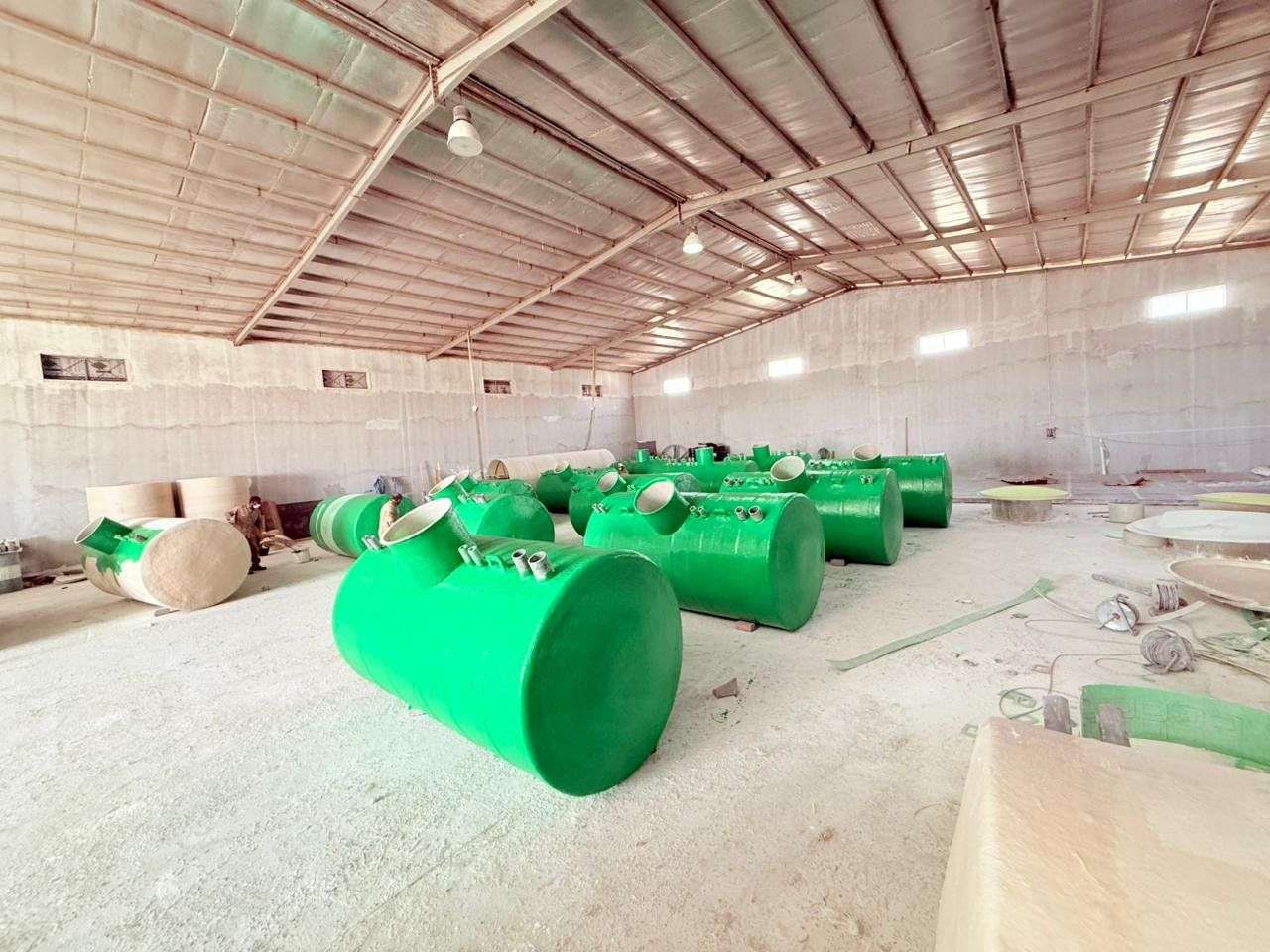
A GRP tank is built from glass fibre saturated with resin, layer on layer. Ours have an 18 mm wall on a 10,000-litre tank.
A plastic tank is moulded from polyethylene; wall thickness and design vary from maker to maker.
| Point | Laura GRP | Plastic tank |
|---|---|---|
| Material | Glass fibre and resin, multi-layer laminate | Moulded polyethylene |
| Burial | Designed for burial to our installation guide | Only as the maker permits |
| Light and algae | Opaque wall keeps light out | Ask the seller about wall opacity |
| Capacities | Any capacity on 7 diameters, from 2,000 L | The sizes the maker produces |
| Warranty | 25 years against manufacturing defects | Often 10 years |
Heat and sun
Hot water in summer comes from the sun, not the tank material. The clearest answer is a buried tank, which stays out of the heat and delivers cooler water.
Any tank above ground is exposed to sun whatever it is made of. If you choose a roof or ground-level tank, shade it where you can and ask the seller how its outer surface handles direct sun.
Under the soil: what carries the load?
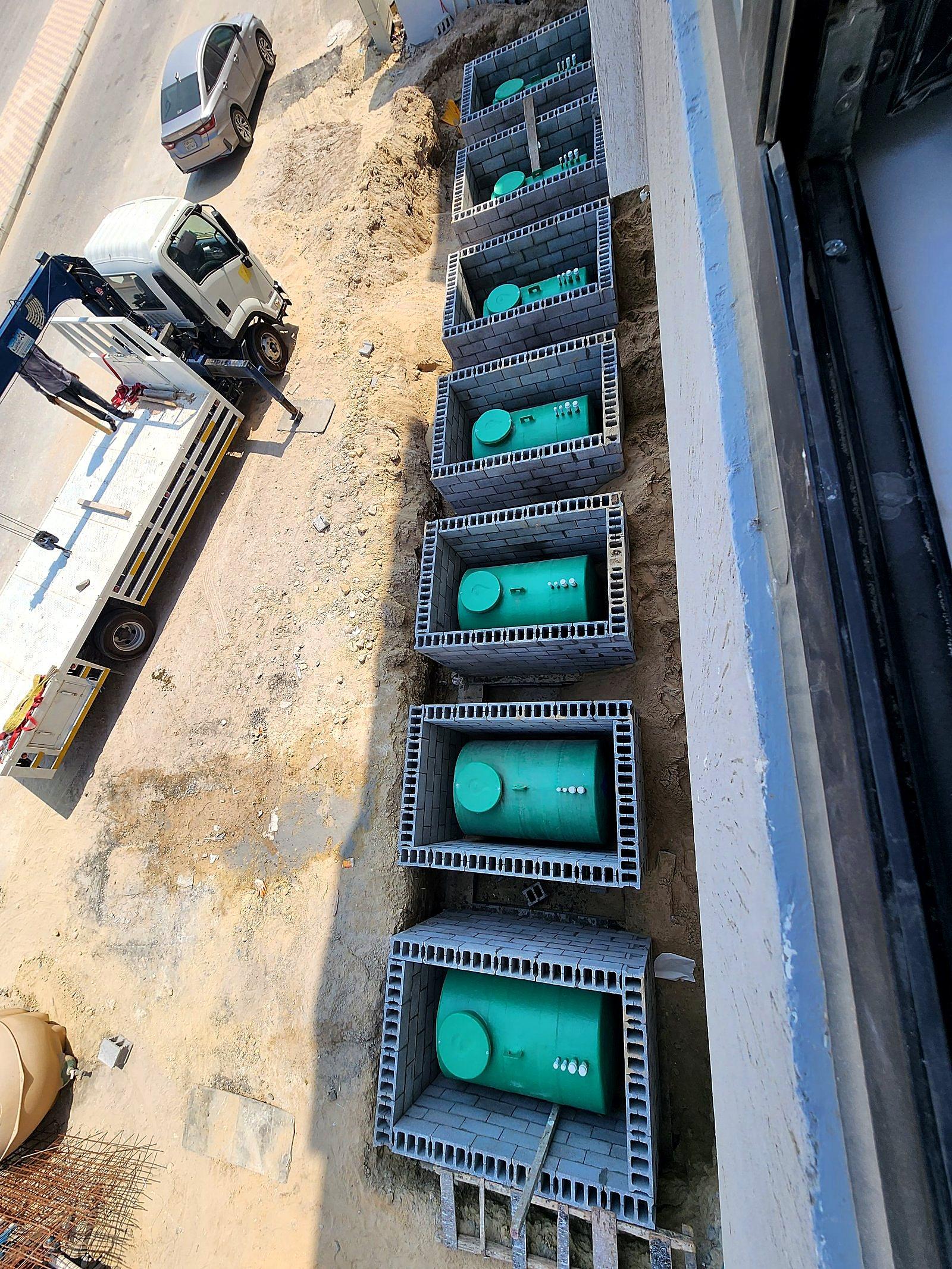
Our GRP tanks are designed to be buried and stay sound when installed to the guide: clean sand around the tank, a reinforced slab above carrying the loads, and no more than 20 cm of backfill over the tank.
If you are considering burying a plastic tank, ask the maker in writing whether burial is permitted, under what conditions, and what the warranty says about it.
When plastic is enough
At small capacities plastic is usually cheaper, and for a small roof tank it can be a reasonable choice.
For a buried tank, a large capacity, a size made to fit a narrow plot, or a longer warranty, GRP is what we build for the job.
Frequently asked questions
Does GRP heat the water?
The sun heats water, not the material. A buried tank stays out of the sun and delivers cooler water; any roof tank warms up whatever its material.
Does algae grow in GRP tanks?
Algae grows where light gets in and cleaning is neglected. Our tank walls are opaque with a smooth inner surface and a sealed manhole, and we recommend cleaning every six months.
Which lasts longer?
We do not quote a design life without a document to support it. What we commit to in writing is the warranty: 25 years from the invoice date against manufacturing defects, subject to the installation guide.
Is plastic cheaper?
Usually, at small capacities. Compare like for like, and factor in warranty, burial suitability and delivery before deciding.
Can a plastic tank be buried?
That depends on the maker's design and terms. Ask for a written answer on burial and how it affects the warranty.
Related pages
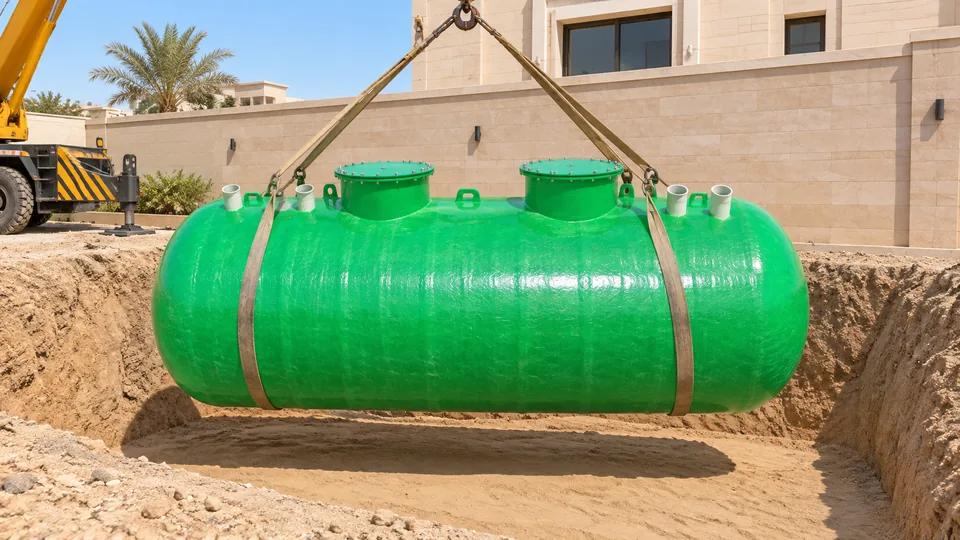
Underground water tanks
Cooler water in summer, no rust or algae, any capacity from 2,000 litres.
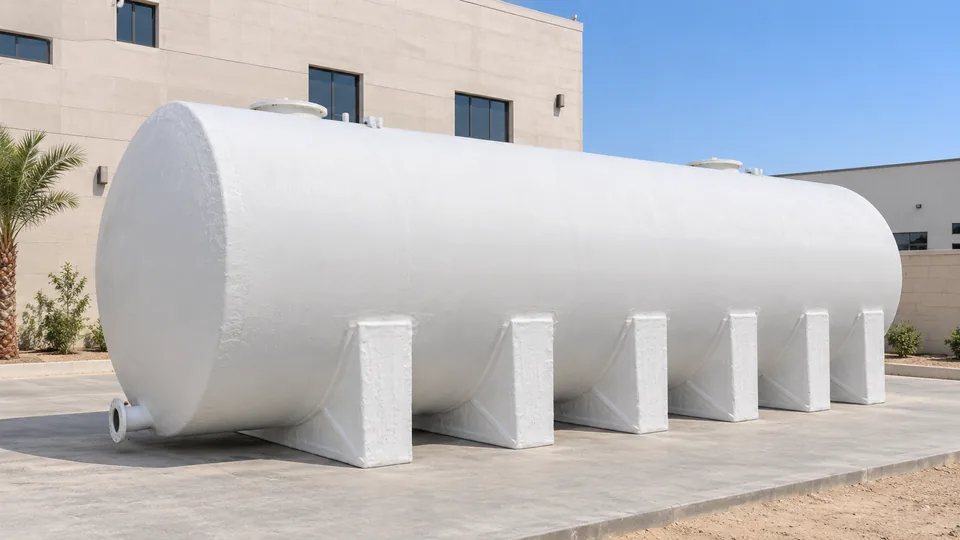
Above-ground water tanks
White horizontal tanks on GRP saddles: no rust, no algae, for buildings and sites.
Warranty
25 years against manufacturing defects, and how to keep it.
Villas and homes
Cooler water in summer, no rust or algae, and a clear split of who digs and who pours.
Ready for your quote?
Send the type, capacity and city, and we reply within an hour.